
ONLINE IN NEW YORK CITY AND SEATTLE, WA
LGBTQ+ Affirmative Therapy
This is a safe space to be exactly who you are.
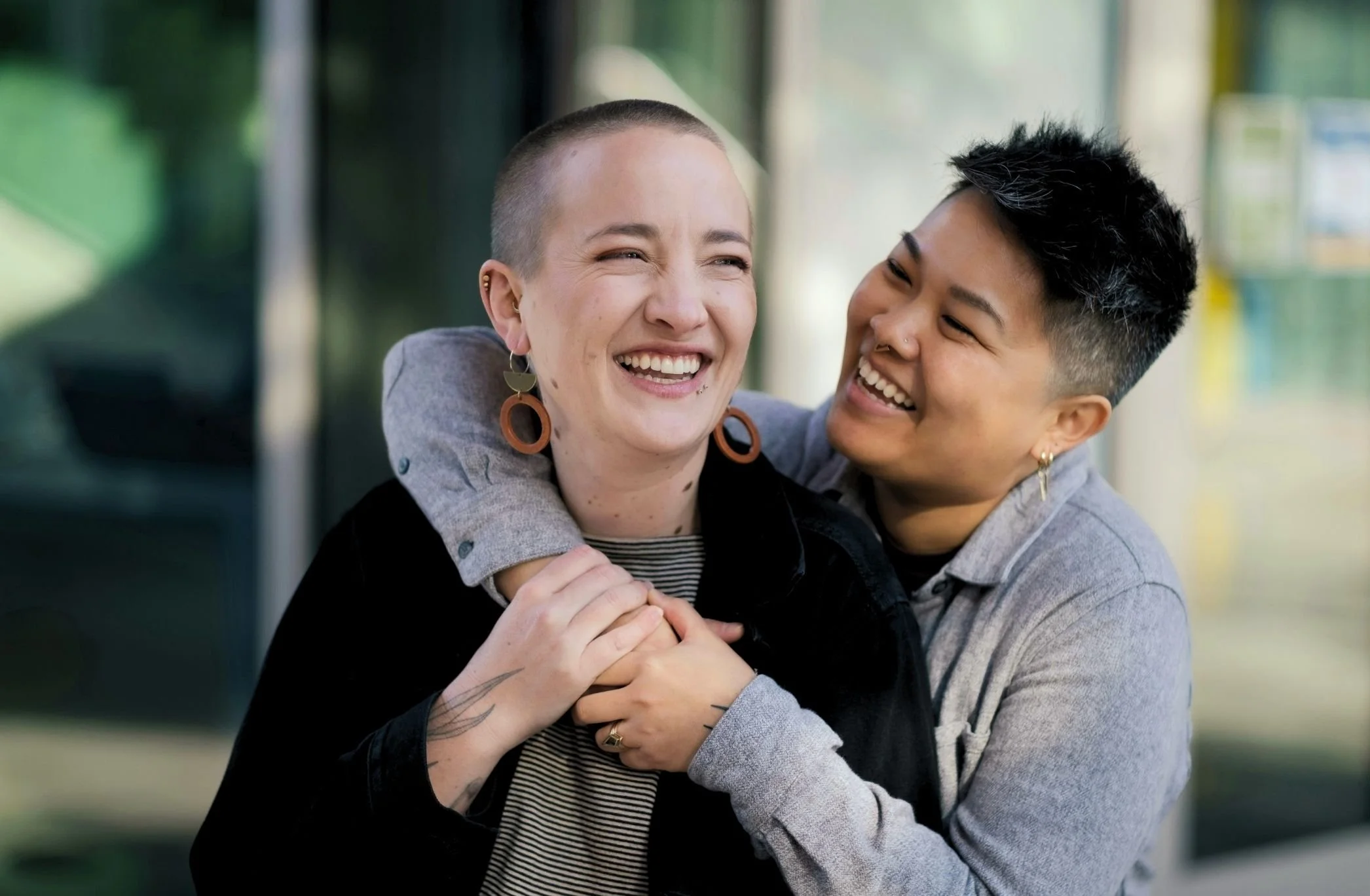
You’re just trying to live your life in a world where your very existence is up for debate.
When you were a kid, you probably didn’t dream of becoming a political statement just by being who you are. But that’s the position you find yourself in now, and it’s overwhelming. Maybe you put up a wall to help yourself cope with those feelings of being “different,” or even as protection from potential physical harm. Now, when you try to talk about what’s going on inside of you, it feels like you’re cut off from it.
The thing is, who you are is so much more than who you love or what you do in the bedroom, but that’s the part everyone is so focused on. You have other stuff going on in your life too that you want to work through and process—work, relationships, goals, life changes—yet the conversations always seem to come back around to your sexual, romantic, or gender orientation.

Meanwhile, you’re navigating…
-
Maybe you’ve just figured out which letter you are in LGBTQ+ and you’re ready to say it out loud. Maybe you spend every June scrolling through the different Pride flags and haven’t found the one that suits you. These are enormous decisions to face alone and you need someone who has walked this journey to help you piece it all together.
Or maybe you’re ready to come out, but you don’t know where to begin. You’re worried about how your family will react and whether they’ll accept you. You could be coming out as bi or pansexual and having to defend that your orientation is real, sometimes even within your own community.
It’s possible you already came out to the people who matter most to you and it didn’t go well. Now you’re trying to understand what happened and how to move forward from this.
-
You might feel like you’ve been living a double life. You go home for the holidays and tell your grandparents you haven’t found anyone special yet, when really you’re in a loving relationship they wouldn’t be able to accept. Maybe you use one name or set of pronouns in public, but go by something completely different at home.
Even as you try on labels, names, pronouns, and clothes that feel so right, you might have cultural or familial beliefs that are at odds with them. You’re stuck in the middle of a tug-of-war between different sides of your identity.
Maybe you’ve always known you were LGBTQ+ and have spent your whole life moving through a world that labeled you as different or sometimes even “wrong.” But you just want to love yourself for who you are.
-
You could be just starting your gender transition and still wearing your deadname on your nametag at work because you’re afraid of what will happen when you tell your employer. Maybe you’re starting HRT and soon you won’t be able to pass as cis anymore, so now you’re really, truly in this.
It’s possible you’ve already told your family and they said they accept you, but your mom still misgenders you and your dad still uses your deadname even though you’ve corrected them thousands of times. Or you came out and your family didn’t accept you. Even though it hurts, you still want a relationship with your family because they mean so much to you, but you don’t know how to make it work.
-
Maybe you’re planning to marry the person you love, and it’s stressful enough without having to also be concerned about how certain members of the guest list will behave. This is a huge moment in your life, but everyone you have to talk to about it is cisgender or heterosexual.
Or maybe monogamy isn’t your thing and that’s so far outside the mainstream, it’s hard to bring up without bracing to defend your romantic orientation. You could be non-partnered and exploring the kink or fetish community, in a primary partnership that’s varying degrees of open, or a mix of all of it. It’s not your whole life, but people tend to get stuck on it whenever you talk about your love life or sex life.
-
You could be newly diagnosed and still trying to figure out what that means. Maybe you’re mad at yourself, mad at your partner, or mad at your community as a whole. You’re feeling so much around this diagnosis—you never wanted to be a statistic—and it’s a lot to carry on your own.
Or maybe you’ve been living with an HIV+ diagnosis for years and your status impacts how you approach relationships. You might be chronically rejected for being positive because of the stigma.
You may have lived through the AIDS epidemic and remember seeing so many people you loved coming down with this mysterious illness and feeling powerless to stop it. Maybe you still have nightmares about it to this day and can’t believe it’s finally caught you too.
-
You may be new to NYC or Seattle, and while you might have had a robust community of queer relationships before, you feel like you’re starting over now. You don’t know where the gayborhoods are or which parts of the city you are less safe to walk through while holding hands with your partner. You’re looking for other people who share your life experience that you can connect with and feel in community with.
You just want to talk to someone who gets it.

You don’t have to hide, downplay, or explain your identity here.
I know what it's like to calculate how much of yourself is safe to share. Homophobia, transphobia, racism, or oppression are very real experiences that can deeply affect your mental health and how open you are with other people (and also with yourself).
When you sit on my virtual couch, you never need to hide or justify your identity, your sex life, your relationships, who you love, or how you live. This is a space where you can have feelings about those things without worrying about how someone is going to react.
How I work
My approach is relational, which means the connection between us is central to this work.

When you experience what it feels like to be fully yourself with someone and have that be met with acceptance instead of judgment, you learn that vulnerability isn’t weakness or inherently dangerous.
Together, we slow down and look at how growing up LGBTQ+ shaped you and how your family, culture, and religious upbringing informed what you believe and what you think you're allowed to feel, need, or ask for. Some of those beliefs are rigid and unrealistic, and they've been making everything harder without you realizing it.
We gently challenge those while giving you a place to process what's happening in your life now.
Offering support for navigating the healthcare system.
Healthcare and social support systems for the gay and transgender communities are a constant point of contention and increasingly difficult to navigate. I’m able to offer additional support to help you receive the healthcare you need.
I’m a contracted EIP provider through the Washington State Early Intervention Program, which helps HIV+ individuals access medications and assistance with insurance premium payments.
Either as a standalone service or as support for our ongoing work, I can provide psychosocial evaluations for accessing gender affirming care, which results in Letters of Support for Gender Affirming Healthcare.
With therapy that affirms who you are, you can…
Navigate your career, your relationships, your mental health, and the big decisions in your life without your identity being an extra obstacle on top of all of it.
Feel at home in your sexuality, your gender, and your identity instead of carrying shame about who you are.
Let your queerness, your family, and your cultural background coexist instead of feeling like they're pulling you in different directions.
Process the pain that came with coming out, family rejection, or growing up feeling like something about you was wrong, so you can stop living your life with a wall up.
Give yourself the space to explore your sexuality, your gender, or your relationship structure without pressure to have it all figured out.
Let the people in your life see who you actually are and watch those relationships get closer because of it.
ONLINE THERAPY IN NEW YORK CITY AND SEATTLE, WA
This is your permission to be freely and authentically yourself.
FAQs
-
I'm a gay, Filipino American man, so a lot of what I bring to this work comes from lived experience. Additionally, I'm trained in relational psychodynamic psychotherapy through the William Alanson White Institute, I've worked with LGBTQ+ clients throughout my career, and I've presented on topics including queering body positivity, LGBTQ+ intersections with career and identity, and the complexities of working with trans and gender non-conforming clients.
I’ve also worked at the GMHC (formerly Gay Men’s Health Crisis), the first organization in the world founded to address the AIDS epidemic.
-
Yes. For some of my clients, their LGBTQ+ identity is something they want to explore and process. For others, it's the backdrop. They're coming in for anxiety, a relationship issue, career stress, and they want a therapist who already gets that part of their life so they can focus on what they came to talk about. I follow your lead on how much or how little your identity is part of our conversations.
-
I'm a Registered Dietitian and I originally specialized in HIV and nutrition before transitioning into psychotherapy. I've worked with GMHC (formerly Gay Men's Health Crisis), and I'm currently part of an HIV grant providing therapy to people living with HIV who don't have insurance. I’m also a contracted EIP provider through the Washington State Early Intervention Program, which helps HIV+ individuals access medications and assistance with insurance premium payments.
-
Yes. You don't have to have it figured out to start therapy. Some of my clients come in knowing exactly who they are. Others are in the middle of figuring it out. Whether you're exploring your sexuality for the first time, questioning your gender, or completely sure of who you are, that is all welcome here.
-
Yes. I provide psychosocial evaluations and Letters of Support for Gender Affirming Healthcare. This can be a standalone service if that's all you need, or it can be part of our ongoing work together. If you're navigating your transition and the relationships around it, including family members who are having a hard time, that's something we can work on too.
-
Therapy is confidential. What you share in our sessions stays between us. There are a few legal exceptions, like if there's imminent risk of harm to yourself or someone else. I don’t accept insurance, which means I don’t need to share what we talk about with a third party. If you're working with other providers and you want me to coordinate with them, I only share what you give me permission to share.